I didn’t have too much time for studying Korean this weekend, but I did manage to read the final chapter of my Integrated Korean Adv. 2 textbook, and this chapter happened to be the story of Chunhyang (춘향전). I’m not too familiar with Korean folk tales except those that have been included in previous textbook chapters and then of course the collection made available by TTMIK. In general, I think I feel about folk tales in the same way I feel about Korean historical dramas. Great stories, but not ideal material for learning purposes given the widespread use of archaic language.
Nonetheless, I actually found to my own surprise that I really enjoyed this story. I even enjoyed the very old Korean language, and I was surprised that I recognized many of the historic words without being able to pinpoint exactly where I had picked them up. I finally might just be ready to watch a real sageuk! However… we all know that this is not going to happen before “Saimdang” starring Song Seung Heon will air later this year, and it’s still unclear exactly when this will be.
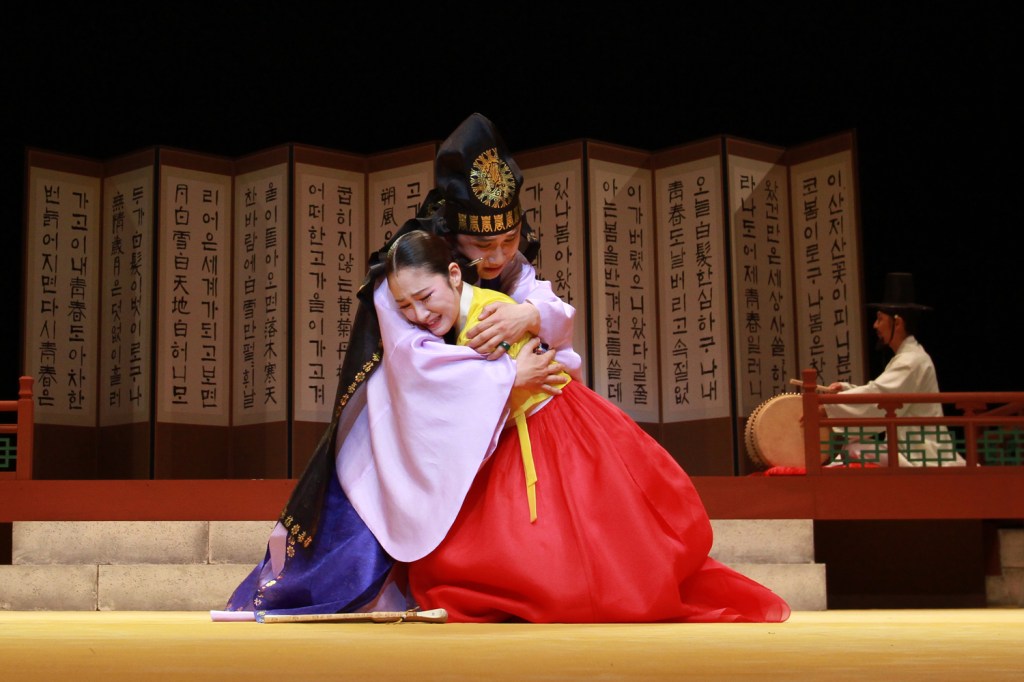
Oh, it’s so easy to get off topic! The story of Chunhyang is extremely beautiful and often praised as the Korean version of Romeo and Juliet (although I like the ending in Chunhyang much better). Aside from being a story about everlasting love, several other themes are explored such as women’s role in the Joseon Dynasty, Confucian ideologies, and human corruption.
Korea.net has posted a summary of the legend in English here, but I encourage Korean learners to find a Korean version and immerse yourselves in the universe of the Joseon Dynasty.
On a grammatical note, the story made frequent use of the now obsolete familiar speech style ending in -네 (statement) -ㄴ가 (question) -세 (suggestion) -마 (promise) and -게 (command). I knew about this pattern, but this was the first time to read a whole text where appeared so frequently.
Do you have a favorite Korean folk tale or historical drama? Feel free to share in the comments.


 Sofie to Korea
Leave a comment