The internet is flowing over with “fast tracks” to language learning and tips on how to become fluent in no time. I once heard someone say “Everybody is talking about learning languages fast, what’s wrong with learning steady and slow?”
While some may say that I have acquired a decent proficiency in Korean quite fast, I agree that this per se needs not be a goal, nor even a significant achievement. In my opinion it’s not really a matter of how fast you learn, but rather how you learn. And in the end, all language learners probably want to learn as effectively as possible. I happen to know a very wise man who has made a few online lectures on how to learn a language. The videos are in Korean and are originally aimed at Koreans who are learning English. All principles, however, work for learning any language – and since these principles will be very helpful to all of you language learners out there, I’ve chosen to feature the videos here on the blog. Since they’re all in Korean I’ll provide a short recap for each of them:
Koreans usually say 고생 끝에 낙이 온다 meaning ”No pain – no gain”, and while this certainly does apply in many situations – language learning is an exception. Learning a language should never be painful – it should be as fun and as natural as learning your mother tongue.
There are a few principles that are worth being aware of when learning a language, and they all relate to the main idea that everyone should ideally learn a foreign language like a baby learning its mother tongue.
1) Listen to the language like you would to music. Familiarize yourself with the sounds and melody. Immerse yourself in the language like soaking yourself in water. Listen to dialogues, read, and watch content in that language without worrying about not understanding.
2) Get closer! Think of learning a language like meeting a new person and getting to know them. When you meet new people, you get to know them in different manners by talking, sharing meals, and exchanging stories! Apply this strategy to language learning and get closer to that language using different sources.
3) Don’t use your head too much! I know I’ve written before, that I was once told in Korean “머리가 장식이 아니다” – your head is not a decoration! However, when learning a language you should clear your head and focus on using your senses instead. You don’t learn by forcing it all into your brain, but by gradually acquiring it through a variety of channels. Always remember: Context is your best teacher! Think about how a word is used and in what situation it occurs? It’s like saying “let’s eat” to a baby who, without knowing the logical meaning of the words, soon realizes that these words relate to a feeling of putting something tasty in your mouth and feeling full after. Even dogs learn commands in English or any language for that matter in this way – through context!
The two biggest advantages of this method are speed and fast absorption. However, in order to get the most out of it – you must first clear your head! Check out this blog post on how to do so.
While it may seem hard to just jump into the water in this way, this is the true fast track to fluency.
Many people use flashcards and memorization when learning a language. I’m one of them to some extent, but I also know that you should never make the mistake of relying on memorization alone. This video introduces four key words that you, however, should memorize when learning any language. Immerse, Copy, Apply, Naturalize (I CAN)!
It’s also a common misconception that you must live in the country of your target language to really immerse yourself. The world is full of examples of people who spend years living in another country without ever learning anything beyond the basics. You don’t have to live in the country where the language is spoken.
Immerse: Books and classes are useful but insufficient for true immersion. Instead you should focus on a variety of learning methods: movies, cartoons, tastes, sounds, feelings – just like a baby gradually familiarizes itself with the language spoken around it.
Copy: Here the important question to ask is “why?” as in “Why does mom say that?” Copy others’ habits of using the language, and use it in the same way.
Apply: Children have no inhibitions or worries when starting speaking, toddlers only focus on getting their message across, they don’t worry about how others view their language efforts or fear having their grammatical mistakes corrected. You should do the same, but in order to really succeed in this way you need a language parent! Not a teacher but a guide – a language partner!
Naturalize: When you make it past the first three steps the last is bound to follow. If you commit to the first steps every day, you will automatically start speaking more naturally.
This video explains how to apply the four steps!
Immerse yourself in the sound of the language and listen, listen, listen. You may want to ask: “How does your language improve if you don’t understand a word?” – Again, think of babies! They hear their mother’s voice before they’re born without understanding a single word. However, gradually they familiarize themselves with the words and their use.
A beautiful analogy for learning a language is imagining looking at a picture. Looking at a big picture requires that you don’t stand too close if you want to see the motive. This rule also applies when watching a movie, reading a book, or listening to a dialogue in your target language. If you dwell upon all the tiny bits of vocabulary you don’t know, you won’t be able to understand the meaning. If you, on the other hand, focus on what you do understand, you’ll often be able to deduct the rest from the context.

In general you can say that there are three types of foreign language: Internalized language (parts of the language you know and are able to use yourself), known language (words you understand, but are not ready to use yourself), and newly encountered language (words you see for the first time). The whole process of language learning is internalizing more and more of the language. And how do you do this? Keep meeting the words and get closer like you would to a person you just met and are starting to like. Also, remember that revisiting words can be both deliberate and coincidental. When children learn their mother tongue they never take out flashcards and start reviewing words. They just keep encountering the words in a natural way until they become internalized. When words are finally truly internalized you won’t ever forget them.
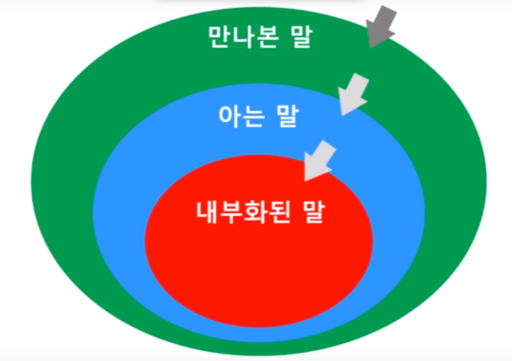
So using these principles, how should you go about learning new vocabulary? First of all, learning new words just to learn them, should not be the focus of your efforts but rather a supplement to your language learning. Also, don’t just learn the meaning – learn the use! That means putting the word into a sentence from the beginning. Also, don’t see grammar, vocabulary and speaking as separate disciplines, but use them together.
The bottom line is that nobody fails at learning their native language. The reason why so many people fail at learning another language is because they give up too fast.
Always remember that nothing will be smooth sailing all the way! You will encounter periods of frustration, where giving up seems like the most appealing option. When this happens you should think of this as a journey to help you grow, a journey which is far more important than the destination! Commit to doing something every day, and don’t forget that learning should be fun!



 Sofie to Korea
Leave a reply to joyoflanguages Cancel reply